
A horse thrives on predictability, and even small changes to their daily management can ripple through their overall well-being.
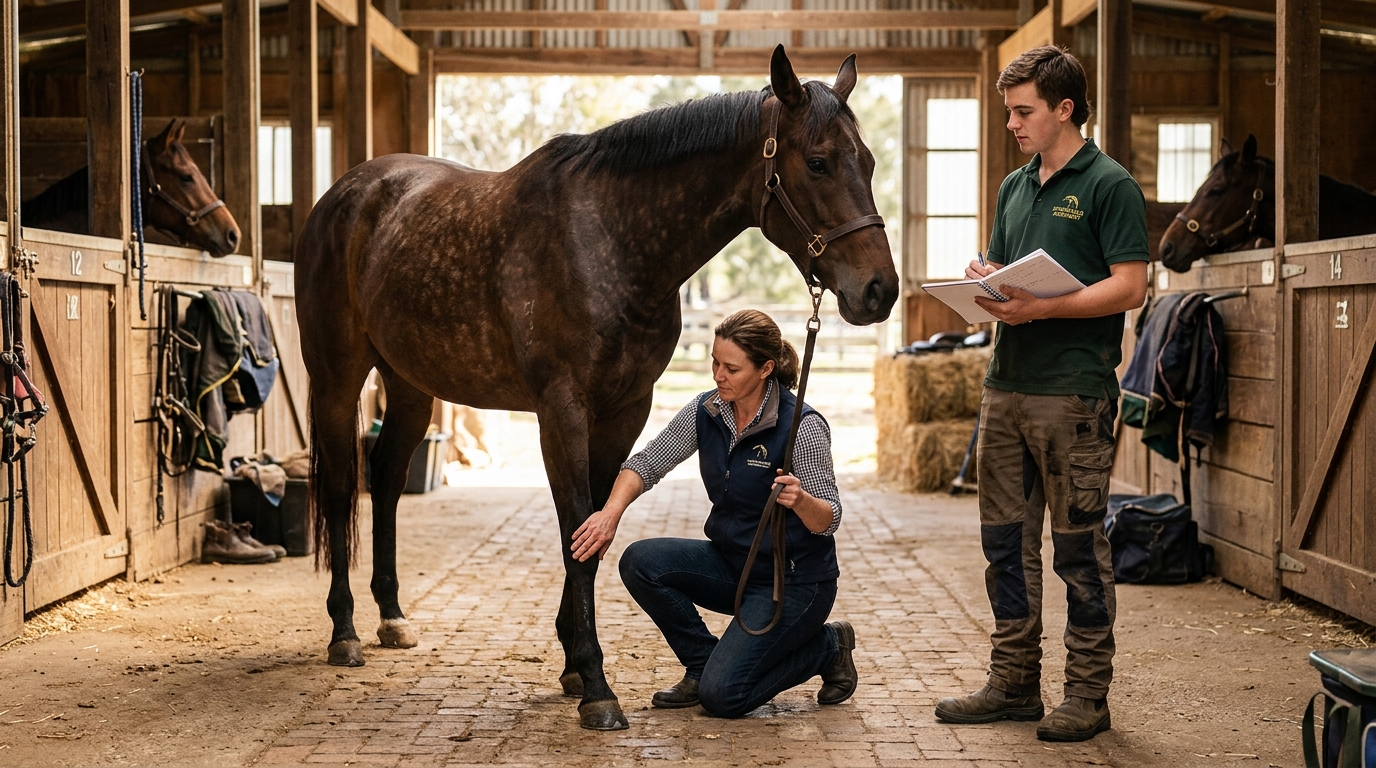
When you agist your horse, property managers and staff act as your eyes and ears on the ground during daily feedings and paddock checks.
Sharing timely updates about adjustments to your horse’s care plan ensures everyone is working together to keep your horse safe and content.
At Harmony Pastures, our team at our horse agistment property in Byford prioritises open communication and responsive daily oversight.
Dietary Adjustments and Feed Ration Changes
Equine digestive systems are delicate, and sudden shifts in feed volume or grain type can trigger serious complications like colic.
Whenever you alter your horse’s hard feed, introduce new supplements, or change hay types, let your care team know in advance.
- Specify exact feed quantities, feeding times, and the intended gradual transition schedule over five to seven days.
- Clearly label feed storage containers and update any communal feed whiteboards or charts.
- Request staff to monitor your horse’s appetite and manure consistency during the transition window.
New Medications, Treatments, and Recovery Schedules
If your horse is recovering from a paddock scrape, recovering from dental work, or taking prescribed anti-inflammatories, keep staff fully informed.
Caregivers need to know what symptoms to watch for, including signs of swelling, lameness, or lethargy.
Always provide clear written veterinary instructions regarding dosage, administration timing, and turnout restrictions.
Shifts in Exercise Workload and Turnout Needs
Increasing your horse’s training intensity or placing them on temporary box rest directly impacts their energy levels and caloric needs.
Horses on reduced exercise often require adjusted roughage portions to prevent boredom-related paddock habits.
Letting your agistment team know helps them manage turnout schedules, herd dynamics, and rugging appropriately.
Subtle Behavioural and Demeanour Changes
You know your horse’s personality best. If they seem unusually sluggish, reluctant to be caught, or irritable toward herd mates, mention it.
Subtle behavioural changes are often the earliest warning signs of low-grade ulcers, dental discomfort, or foot soreness.
If changes persist or cause distress, seek guidance from an equine veterinarian. To discuss tailored care options, please contact our dedicated team today.